I’ve Been Told I Have PCOS. Is It Now Called PMOS?
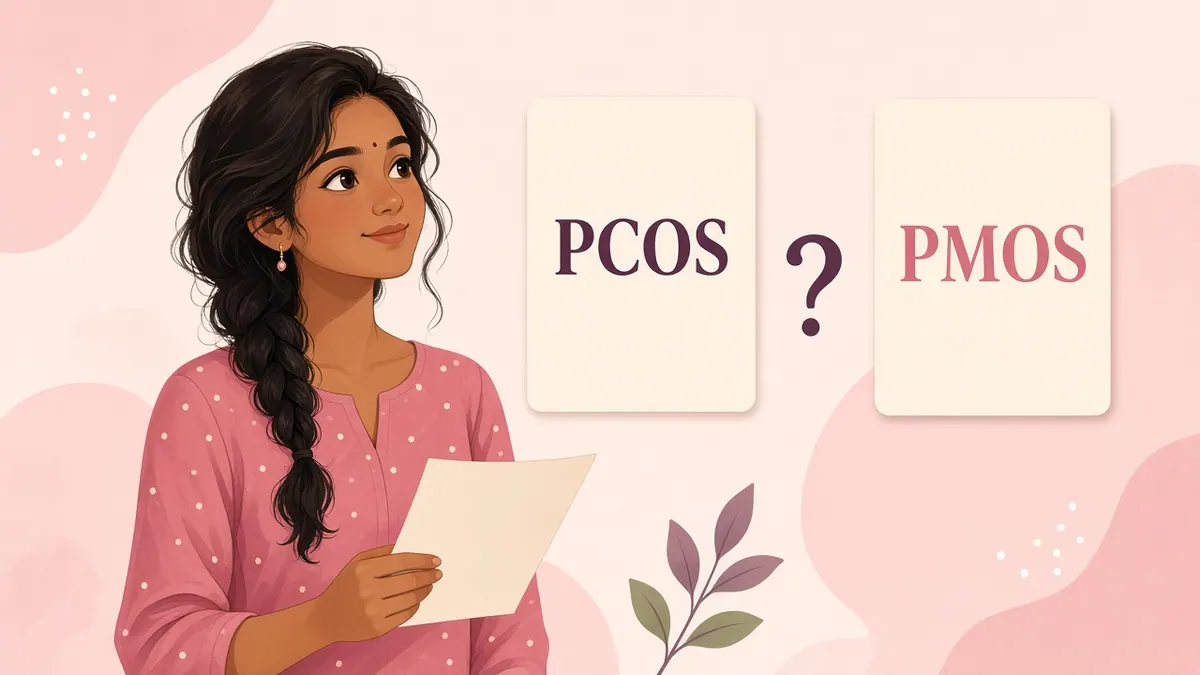
PCOS has a new international name, PMOS. The condition is the same. The old name made it sound as if it were only about cysts.
She had been told she had PCOS.
The report mentioned “cysts” on her ovaries. She left the visit picturing something growing that should not be there.
Later she heard a new name: PMOS.
Naturally, she wondered:
“Is this a different condition? Do I still have PCOS?”
The answer is: it is the same condition. The international name has changed.
What did PCOS stand for?
PCOS stood for polycystic ovary syndrome.
The name drew attention to the appearance of many small follicles on an ultrasound, often described as “multiple cysts.”
Those are not the same as a true ovarian cyst that needs its own plan. A scan that mentions a cyst, a fibroid, or endometriosis is a different question, discussed under fibroids, ovarian cysts and endometriosis.
Why did the name change?
The old name was easy to misunderstand.
Not every woman with this condition has that ultrasound appearance.
The condition is mainly a hormonal and metabolic imbalance, not only a problem of cysts. It can affect periods, ovulation, skin, weight, and long-term metabolic health.
The word “cysts” can cause unnecessary worry, and it can hide the rest of the picture.
In May 2026, an international consensus renamed polycystic ovary syndrome to polyendocrine metabolic ovarian syndrome, or PMOS. The Endocrine Society and the American Society for Reproductive Medicine have endorsed that name. (The Lancet — Polyendocrine metabolic ovarian syndrome)
What does PMOS mean?
PMOS stands for polyendocrine metabolic ovarian syndrome.
The new name points to three parts of the same condition:
- endocrine, or hormonal, features
- metabolic features, such as insulin resistance, weight change, or cholesterol changes
- ovarian features, including irregular or absent ovulation
Polycystic ovary morphology on ultrasound may or may not be present. A scan alone does not make the diagnosis, and a normal scan does not rule it out.
Care for irregular cycles and this condition is described on PCOS and irregular periods.
What has not changed?
This is the same condition.
You have not suddenly developed a new disease because the name changed.
Diagnosis is still clinical. It is based on your history, examination, and selected tests, not a single ultrasound or blood report.
Treatment is still individual. It may include help with cycles, skin or hair changes, metabolic health, or fertility, depending on what matters to you.
For teenage girls, that conversation can also start in adolescent gynecology.
Painful periods are a separate question. Severe period pain is discussed in painful periods: when could it be endometriosis?.
Bleeding that suddenly comes every two weeks in your 40s is also a different question, covered in periods every two weeks at 47.
A three-year transition is under way. The international guideline update is expected in 2028. Until then, you will still see both names. (Endocrine Society — Polyendocrine Metabolic Ovarian Syndrome)
When should you speak to a gynaecologist?
Speak to your gynaecologist if:
- your periods are irregular, very heavy, or have stopped
- you have been told you have PCOS or cysts on the ovaries and want that explained
- you notice acne, unwanted hair growth, or weight changes that worry you
- you are trying to conceive
- you are a parent and want a calm explanation for a teenage girl
A PCOS and irregular periods visit is a suitable place to start.
Other related readings
- PCOS and irregular periods
- Adolescent gynecology
- Fertility evaluation
- Fibroids, ovarian cysts and endometriosis
- Painful periods: when could it be endometriosis?
- I’m 47 and my periods are coming every 2 weeks. Is this menopause?