
I’m 47 and My Periods Are Coming Every 2 Weeks. Is This Menopause?
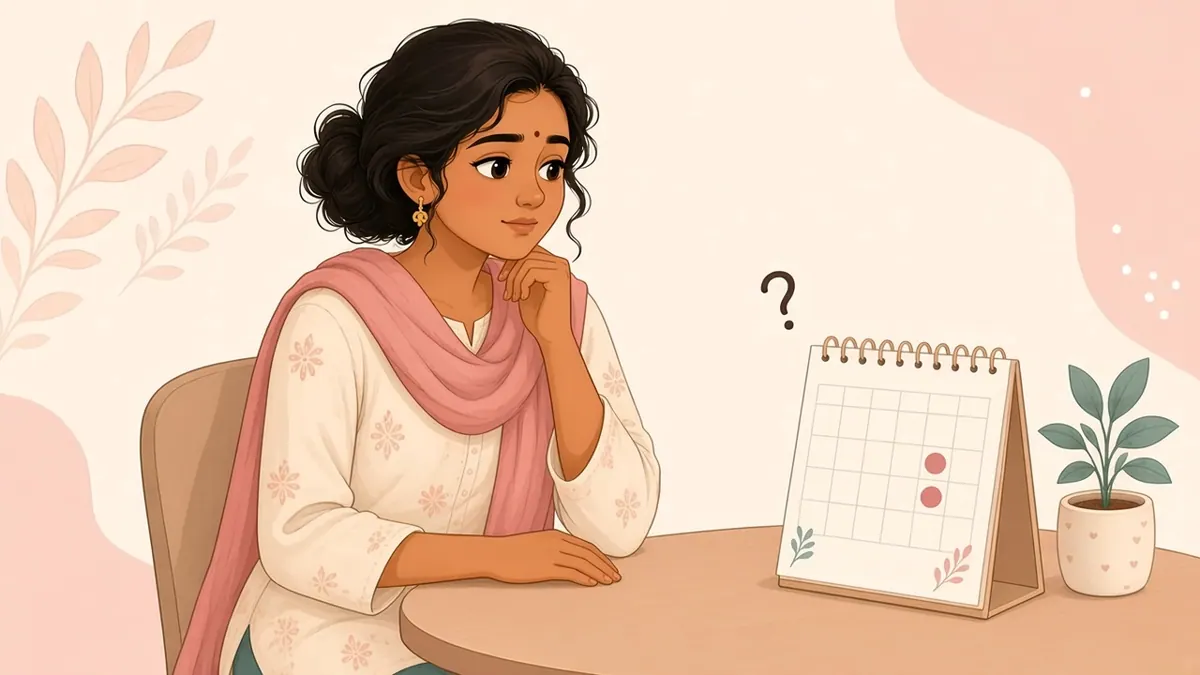
Periods often change in your 40s. But very frequent bleeding should not automatically be put down to menopause.
For years, her periods had been predictable.
Every month, more or less on time.
Then, at 47, something changed.
Her periods started coming every two weeks. Sometimes the bleeding was heavier. Sometimes it was different from what she had been used to.
Naturally, she wondered:
“Is this just my age? Is this menopause?”
The answer is: it could be related to the menopause transition — but frequent bleeding should still be evaluated.
Is this menopause or perimenopause?
The two terms are often used interchangeably, but they mean different things.
Perimenopause is the transition leading up to menopause. During this time, hormone levels fluctuate and ovulation becomes less predictable.
Menopause is reached only after you have gone 12 consecutive months without a menstrual period, assuming there is no other reason for the periods to have stopped. (NHS — What are menopause and perimenopause?)
At 47, being in perimenopause would be very common.
But if you are still having periods — even irregular ones — you have not yet reached menopause.
Can perimenopause make periods more frequent?
Yes.
One of the earliest signs of perimenopause can be a change in the pattern of your periods.
They may become:
- more frequent or further apart
- heavier or lighter
- longer or shorter
- less predictable than before
This happens because estrogen and progesterone levels fluctuate and ovulation may not occur regularly. (NHS — Symptoms of menopause and perimenopause)
So a woman who previously had a period every 28 days might notice that some cycles become shorter.
However, that does not mean every change in bleeding during your 40s should simply be labelled perimenopause.
Why should periods every two weeks be checked?
A period coming every two weeks means the interval between bleeds is much shorter than the usual menstrual cycle.
Periods consistently occurring less than 21 days apart fall into the category of abnormal uterine bleeding and deserve medical assessment. (American College of Obstetricians and Gynecologists — Abnormal Uterine Bleeding)
Perimenopause may ultimately be the explanation.
But your gynaecologist first needs to consider whether there is another reason for the change.
The important question is not simply:
“Am I old enough for perimenopause?”
It is also:
“Is there anything else causing this bleeding that we should identify?”
What else can cause frequent or unusual bleeding?
Several conditions can change menstrual bleeding during the 40s.
Fibroids
Fibroids are non-cancerous growths arising from the muscle of the uterus. Depending on their size and location, they can cause heavier, prolonged or irregular bleeding.
Uterine polyps
Polyps are usually benign growths arising from the lining of the uterus or cervix. They can cause irregular bleeding or spotting.
Changes in ovulation
Irregular ovulation becomes increasingly common during perimenopause. Without regular ovulation, the lining of the uterus may build up and shed unpredictably.
Thyroid problems
Both an overactive and an underactive thyroid can affect menstrual patterns.
Adenomyosis and other uterine conditions
Changes within the muscle or lining of the uterus can sometimes contribute to heavier or abnormal bleeding.
Changes in the endometrium
The endometrium is the lining of the uterus. Abnormal thickening of this lining, known as endometrial hyperplasia, can cause abnormal bleeding.
Less commonly, abnormal bleeding may be a sign of endometrial cancer. This is one reason why a new or persistent change in bleeding pattern should be evaluated rather than assumed to be due to age alone. (American College of Obstetricians and Gynecologists — Perimenopausal Bleeding and Bleeding After Menopause)
What will the gynaecologist check?
The evaluation depends on your age, symptoms, bleeding pattern, medical history and individual risk factors.
Your gynaecologist may ask:
- How frequently are you bleeding?
- How long does each episode last?
- Has the bleeding become heavier?
- Are you passing large clots?
- Is there bleeding between periods or after intercourse?
- Do you have pelvic pain?
- Could pregnancy still be possible?
- Are you taking hormones, contraception or other medicines?
- Do you have conditions such as thyroid disease, diabetes or PCOS?
- Is there any relevant family history?
Keeping a simple diary of the dates and heaviness of your bleeding can be very useful.
Depending on the findings, evaluation may include blood tests, an ultrasound and, in some women, assessment of the uterine lining.
For abnormal uterine bleeding in women over 45, endometrial sampling is commonly part of the evaluation because changes in the uterine lining become more important to exclude in this age group. (American College of Obstetricians and Gynecologists — Management of Acute Abnormal Uterine Bleeding in Nonpregnant Reproductive-Aged Women)
This does not mean something serious is expected. It means the investigation should be appropriate for your age rather than assuming that the bleeding is hormonal.
When should you seek medical advice?
Make an appointment if your periods have suddenly become:
- much more frequent than before
- very heavy
- prolonged
- unpredictable
- associated with bleeding between periods or after intercourse
- accompanied by increasing pelvic pain
Seek urgent medical attention if bleeding is extremely heavy — for example, soaking through a pad or tampon every hour for more than two hours — particularly if you also feel dizzy, faint, breathless or unwell. (American College of Obstetricians and Gynecologists — Abnormal Uterine Bleeding)
And once you have gone 12 months without a period, any subsequent vaginal bleeding should always be evaluated. (NHS — Symptoms of menopause and perimenopause)
Your periods are changing. You don’t have to just “put up with it.”
Changes in your 40s are common.
At 47, irregular or changing periods may very well be part of perimenopause.
But:
Perimenopause can explain changes in your cycles. It should not automatically be used to explain every episode of abnormal bleeding.
If your periods suddenly start coming every two weeks, become unusually heavy or change significantly from your normal pattern, speak to your gynaecologist.
Often the cause is manageable.
And sometimes, simply understanding why your body has changed is the first step towards feeling more confident about this next phase of life.
Other related readings
- Menopause awareness
- Bone health in women
- Fibroids, ovarian cysts and endometriosis
- Menopause and midlife gynecology at Cura Femina
References
- NHS — What are menopause and perimenopause?
- NHS — Symptoms of menopause and perimenopause
- American College of Obstetricians and Gynecologists — Abnormal Uterine Bleeding
- American College of Obstetricians and Gynecologists — Perimenopausal Bleeding and Bleeding After Menopause
- American College of Obstetricians and Gynecologists — Management of Acute Abnormal Uterine Bleeding in Nonpregnant Reproductive-Aged Women