Bone health in women
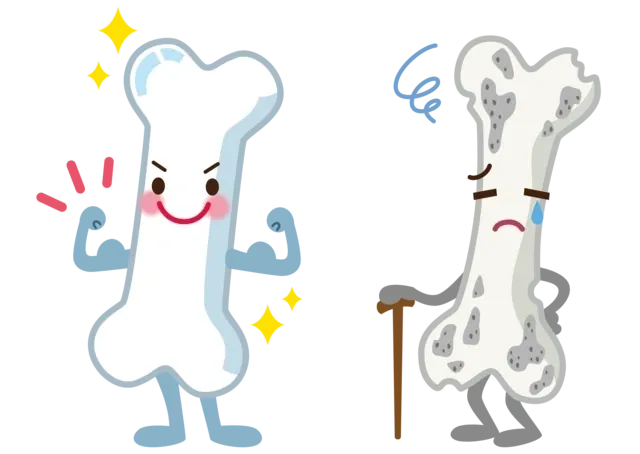
Bone weakness caused by low bone mass (Osteoporosis) is a serious and silent public health problem that is under-recognized. Osteoporosis makes a person susceptible to fracture from trivial injuries, leading to considerable deterioration in quality of life, especially in women. According to the Indian Society for Bone and Mineral Research, 20% of Indian women above 50 yrs have Osteoporosis. But unfortunately, awareness about this is only among 10%-15% of the population. As a result, usually no proactive care is given and diagnosis / treatment is triggered only by a fracture.
Osteoporosis is accelerated in women due to menopause – 20% of post-menopausal women are diagnosed with osteoporosis compared to 4% of men in the same age group. Since we can slow down / prevent osteoporosis to a great extent with healthy lifestyle choices, preventive measures are quite impactful. In this post, let us look at some of the common queries around bone health.
What are the consequences of having Osteoporosis?
- Fractures of hip, spine and wrist from trivial incidents like fall from standing height or even following a bout of cough. Hip fractures lead to severe mobility impairment affecting quality of life and even increase the risk of death in the first year of fracture
- Persistent lower back pain and neck pain
- Height loss upto two inches
- Vertebral body collapse leading to hunchback
What happens to the bones with age?
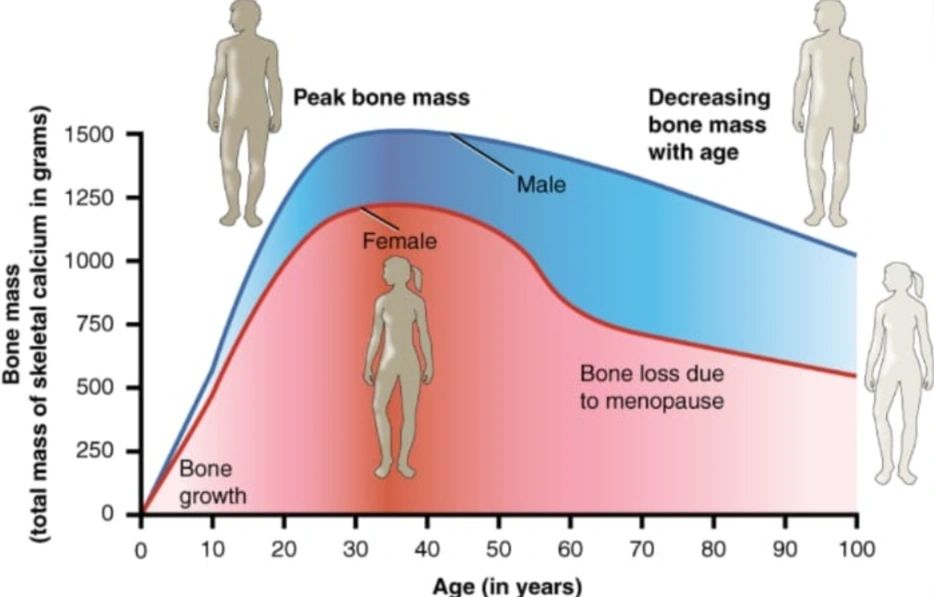
Bone is a dynamic organ that undergoes constant re-modelling through formation and loss of bone mass. Key points about bone mass variation with age:
- Most people reach peak bone mass between 25 and 30 years of age.
- 90% of peak bone mass is reached by 18 years in girls and 20 years in boys.
- By 40, slowly formation will not be able to compensate for loss – leading to weakness. So, it is better to have a healthy bone mass by 40.
It is important that necessary steps are taken in the adolescent age itself to have healthy bones. The chart below indicates the progression of bone mass with age in male and female.
Why women are more prone for bone weakness?
- Women have generally thinner bones with lesser mass.
- Menopause causes decline in oestrogen (female sex hormone) and this accelerates loss of bone mass – leading to weaker bones.
So, being a female itself is a risk factor for osteoporosis and should take special care to maintain a healthy bone mass.
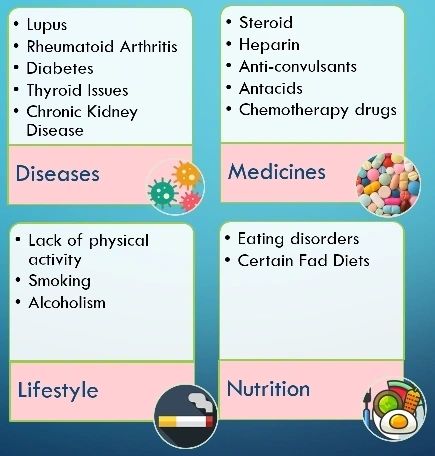
What are the other factors that accelerate bone weakness?
What are the steps to maintain bone strength?
- Nutrition: Sufficient calcium intake is the most important aspect to maintain bone strength. While this is common knowledge, one needs to avoid the common mistake of consuming only supplements to cover the recommended calcium intake. Let us not forget that nutrition through natural food is any day better that any supplement. So, we need to assess the current diet and consume supplements only to cover the difference between recommended and actual amounts. Important nutrition points to consider related to bone health:
- Recommended Calcium intake (Diet + supplements)
- Age < 50 yrs is 1000 mg per day
- Age > 50 yrs is 1200 mg per day
- Vitamin D is needed in the right level to ensure Calcium absorption
- Recommended Calcium intake (Diet + supplements)
- Lifestyle: Apart from nutrition, lifestyle also plays an important part in making the nutrition effective to maintain bone strength.
- Regular exercise at least 5 days a week including
- Weight bearing exercises like walking, dancing, climbing stairs etc.
- Muscle strengthening exercises like lifting free weights, working with resistance bands, push-ups etc.
- Balance and flexibility exercises like yoga and stretching
- Avoid smoking and limit alcohol intake
- Regular exercise at least 5 days a week including
Is there a test to check for bone weakness?
Yes, DEXA scan uses very low levels of X-rays to measure the density of bones and helps in detecting bone weakness. Bone mineral density (BMD) testing is recommended for all women over 65 years every 2 years. For women between 50 and 64 years, testing needs to be decided case to case based on risk factors.
Summary
- Osteoporosis is not a sudden old-age event. It is a result of the diet and lifestyle choices across the lifetime which can be prevented with appropriate choices
- Adolescents need adequate nutrition and physical activity to gain sufficient bone mass for sustaining a lifetime
- Key points for maintaining bone health:
- Calcium rich diet
- Adequate sun exposure
- Physical activity
- No addictions