
Positive pregnancy test: what does it actually confirm?
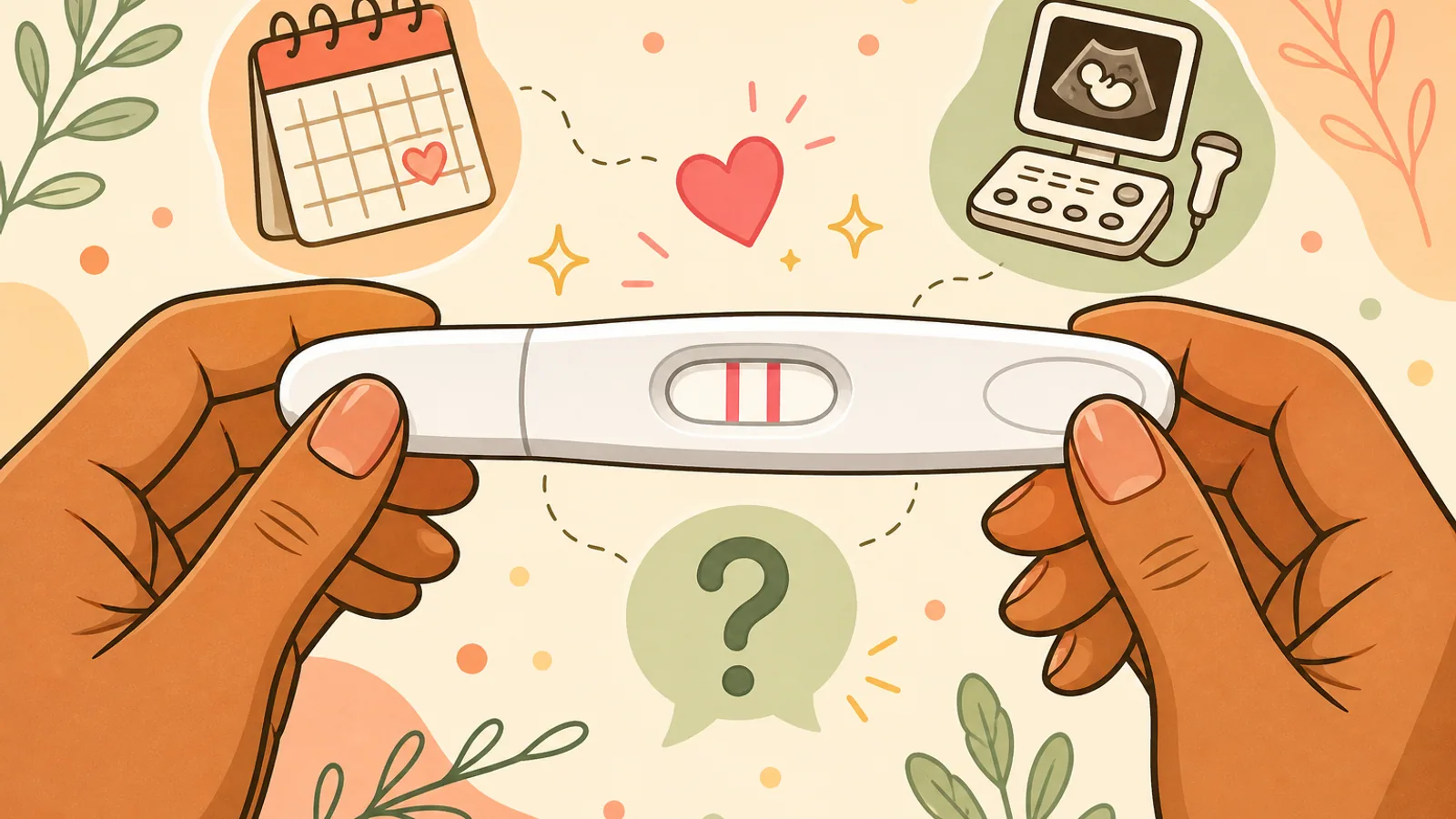
Seeing two lines on a pregnancy test can bring excitement, surprise and plenty of questions.
But what exactly has the test confirmed?
A positive home pregnancy test is an important first step. It tells us that the pregnancy hormone hCG (human chorionic gonadotrophin) has been detected in your urine. When a home pregnancy test is used correctly, a positive result is generally very reliable.
Those two lines cannot, however, tell us everything we need to know about an early pregnancy.
What does a positive pregnancy test tell you?
Pregnancy tests work by detecting hCG, a hormone that begins to be produced after implantation.
So, in most circumstances, a positive test means you are pregnant.
It is important to understand the difference between detecting pregnancy hormone and assessing the pregnancy itself.
A urine pregnancy test cannot show us:
- where the pregnancy is located
- whether the pregnancy is developing as expected
- how far along the pregnancy is
- whether there is one baby or more than one
These questions require further assessment, particularly an appropriately timed ultrasound scan.
Why does the location of the pregnancy matter?
A normal pregnancy develops inside the uterus.
Occasionally, a pregnancy implants outside the uterus, most commonly in a fallopian tube. This is called an ectopic pregnancy.
An ectopic pregnancy also produces hCG, so the urine pregnancy test can still show two positive lines.
In other words: a positive pregnancy test cannot tell you whether the pregnancy is inside the uterus.
Ultrasound, sometimes together with blood tests and clinical assessment, is used when necessary to establish the location of the pregnancy.
Does a positive test mean the pregnancy is developing normally?
Not by itself.
A urine pregnancy test cannot assess the development or viability of a pregnancy.
In early pregnancy, an ultrasound performed at the appropriate time can provide much more information. Depending on how far along the pregnancy is, it may help establish the location of the pregnancy and assess expected developmental features.
A scan performed too early may not yet show everything clearly. That does not automatically mean that something is wrong.
A later article will cover what the first early-pregnancy scan can tell you, and why timing matters.
What should you do after a positive pregnancy test?
If you have just seen those two lines:
- Start or continue folic acid if you are not already taking it.
- Arrange an early pregnancy consultation with your gynaecologist.
- Tell your doctor about any regular medicines or supplements you are taking.
- Discuss the appropriate timing of your first ultrasound rather than arranging a scan extremely early simply for reassurance.
- Avoid stopping prescribed medicines on your own without medical advice.
Your gynaecologist can advise the next steps based on your last menstrual period, cycle regularity, medical history, previous pregnancies and any symptoms you may have. Regular antenatal check-ups then continue that care through the rest of pregnancy.
When should you seek medical attention urgently?
Most women with a newly positive pregnancy test will not have a serious problem.
However, seek prompt medical attention if you develop:
- severe or increasing abdominal or pelvic pain
- significant vaginal bleeding
- pain mainly on one side of the abdomen
- shoulder-tip pain
- dizziness or fainting
These symptoms can sometimes occur with an ectopic pregnancy or another early-pregnancy complication and should not be ignored.
Two lines are the beginning
A positive pregnancy test is an important milestone.
The urine test tells us that pregnancy hormone is present. It cannot tell us where the pregnancy is, how it is developing, how far along it is or how many pregnancies are present.
That is why the next step after a positive test is not simply another home test. It is to begin appropriate pregnancy care and discuss with your gynaecologist when your first ultrasound should be performed.
Two lines are the beginning — not the whole confirmation.
Other related readings
- Planning a pregnancy? Start folic acid before the test turns positive
- Feeling well in pregnancy? Why regular check-ups still matter
- Preconceptional counselling
- Pregnancy care at Cura Femina